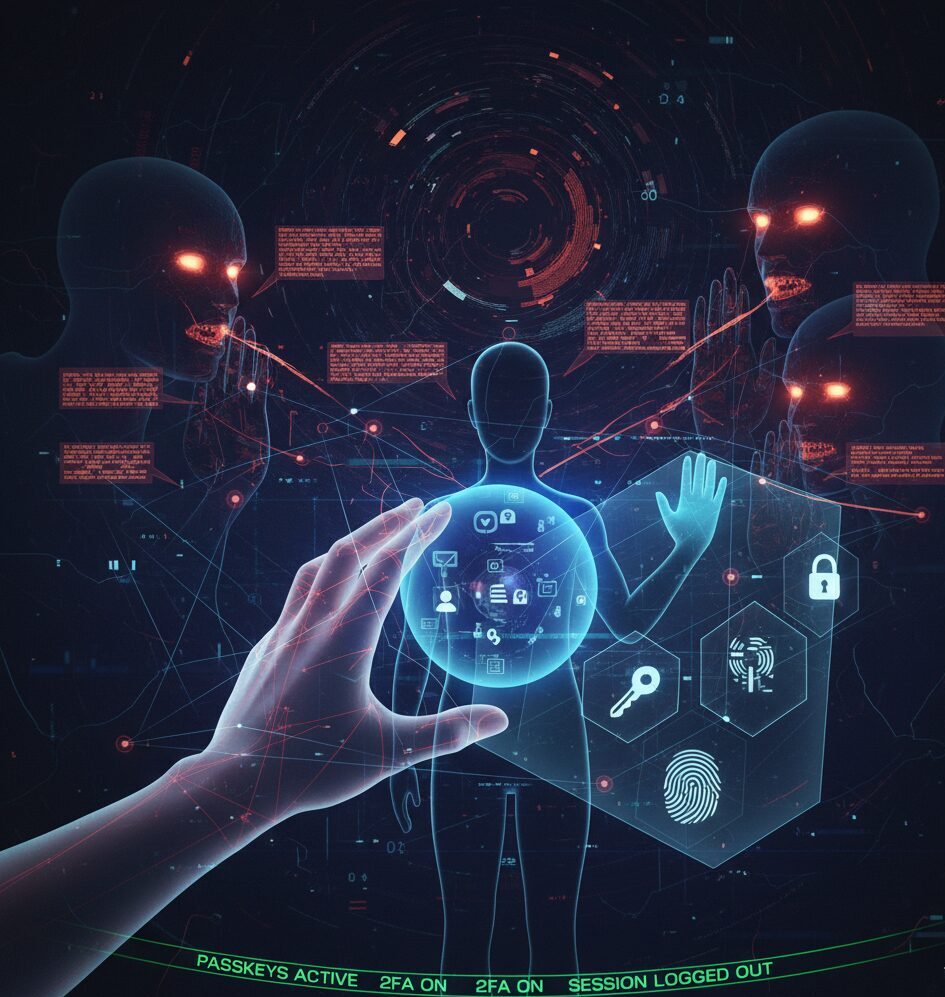
Digital Stealth Intrusion, Psychological Manipulation, and Self-Defense Strategies
In-Depth Analysis of Modern Cyber Threats: Invisible Compromise and Building Resilience
- Introduction: The Invisibility of Threats and Digital Identity Vulnerability
- 1. The Technical Reality of “Silent” Hacking in LINE and Google
- 2. Impersonation and Psychological Tactics via Virtual Number Apps
- 3. Ultimate Defense: Technical Fortification and Resilience
- Warning to the Perpetrator: The Pathological Mind of Privacy Invasion
- References & Citations
Introduction: The Invisibility of Threats and Digital Identity Vulnerability
In modern society, individual lives are built upon digital infrastructures provided by platforms like Google and LINE. These services go beyond simple communication; they are the core of “Digital Identity,” holding banking details, health records, location history, and professional secrets. However, behind this convenience, attacker methods have evolved from visible “account takeovers” to “Stealth Intrusions”—where users may not even realize they are being compromised.
1. The Technical Reality of “Silent” Hacking in LINE and Google
Modern attackers prioritize maintaining a “silent” state, allowing them to persistently monitor data in the background without altering passwords or alerting the victim.
Mechanism of Token Theft and Session Hijacking
The core of silent hacking is not stealing the password, but the “Session Cookie” or “Authentication Token.” Once an attacker steals these, they can access an account as a legitimate user without passing through Two-Factor Authentication (2FA). To the server, it appears as a “continued session from an already authenticated device,” often suppressing new login notifications.
Vulnerability in Google OAuth2 MultiLogin Endpoints
A critical example is the exploitation of Google’s “MultiLogin” endpoints. Attackers use malware to steal refresh tokens, allowing them to generate persistent session cookies. The most dangerous aspect is that these sessions may remain valid even after a password change, enabling long-term surveillance of emails, photos, and real-time location.
LINE’s Stealth Access and Surveillance Blind Spots
If an attacker gains access via a PC or Chrome extension version of LINE, the victim receives only a single initial notification. If missed or misidentified as their own action, the attacker can monitor all chat logs in real-time with no further alerts. Attackers often time their logins during the victim’s sleep or during legitimate PC usage to minimize suspicion.
2. Impersonation and Psychological Tactics via Virtual Number Apps
Cybercrime has expanded into “Psychological Warfare” aimed at destroying a target’s mental well-being.
Algomethry: Peeking into secrets for a sense of superiority… The aftermath of account hijacking.
The Weaponization of Trust by Close Associates
As detailed in the reference video, perpetrators are often not “anonymous hackers” but those closest to the victim—friends, partners, or colleagues. They have physical access to devices and use their psychological proximity to extract information. Acting as a “supportive friend” while secretly using virtual number apps (like 2nd Line) to harass the target is a hallmark of modern digital stalking.
Psychological Deep-Dive: Superiority and Obsession
| Motive | Psychological Background | Behavioral Pattern |
|---|---|---|
| Superiority | Sense of omnipotence from monopolizing secrets. | Hints at knowing things they shouldn’t. |
| Psychological Control | Creating anxiety to make the target dependent. | Offering “help” while seizing more control. |
| Distorted Obsession | Desire to know and manage every aspect of the target. | Obsessive monitoring of location and friends. |
3. Ultimate Defense: Technical Fortification and Resilience
To combat the anxiety of “everything being leaked,” users must implement professional-grade multi-layered defense.
Technical Measures: Moving Beyond Passwords
- Adopt Passkeys: Use biometric authentication to physically prevent credential theft via phishing.
- Physical Security Keys (FIDO2): Hardware keys (USB/NFC) are the strongest 2FA. Access is impossible without physical contact.
- Strict Session Management: Regularly audit “Logged-in Devices” on LINE and Google, and force-logout any unrecognized sessions immediately.
Psychological Resilience: Resisting Digital Gaslighting
The strongest weapon against psychological harassment is “Zero Response.” Reaction is fuel for the attacker. Documenting incidents objectively helps transform subjective fear into actionable facts.
Warning to the Perpetrator: The Pathological Mind of Privacy Invasion
Monitoring chat logs, private photos, and location history is not a “game.” It is a fundamental violation of human dignity and a manifestation of a profound psychological void.
The illusion of control you currently enjoy is a fragile house of cards built on technical coincidences and the victim’s trust. Digital footprints never truly vanish. By parasitizing another person’s life, you are only illuminating your own insignificance. Eventually, this path leads to total isolation—a world where you can trust no one and no one can trust you. Deep down, you are already drowning in the very darkness you seek to inflict.
References & Citations
- https://butterflyandtea.com/stoker-4/
- https://butterflyandtea.com/criminal-psychology/
- https://butterflyandtea.com/cyberstalker/
- https://butterflyandtea.com/ghostwriter/
- https://butterflyandtea.com/note/
- https://butterflyandtea.com/persistence-of-stalking-behavior/
- https://butterflyandtea.com/hell/
- https://butterflyandtea.com/notworthbeingloved/