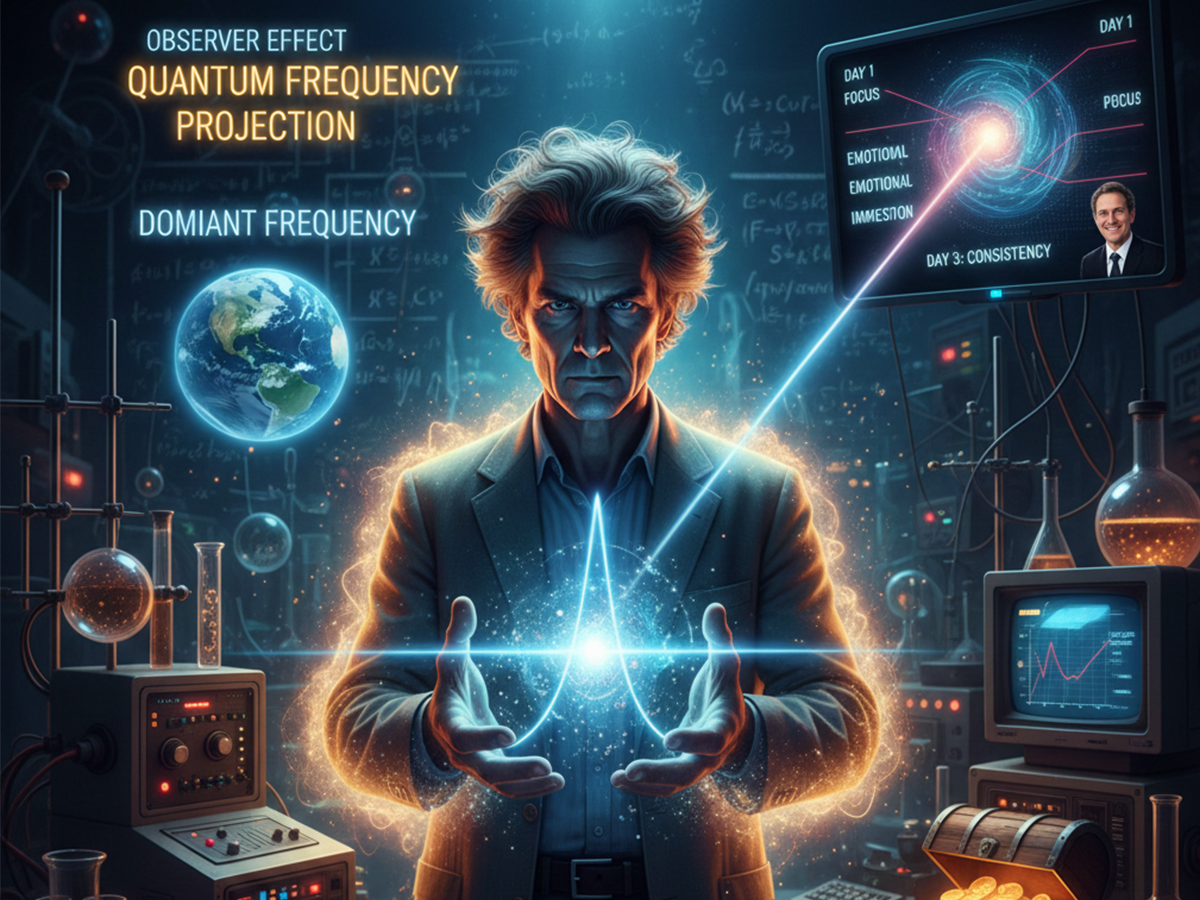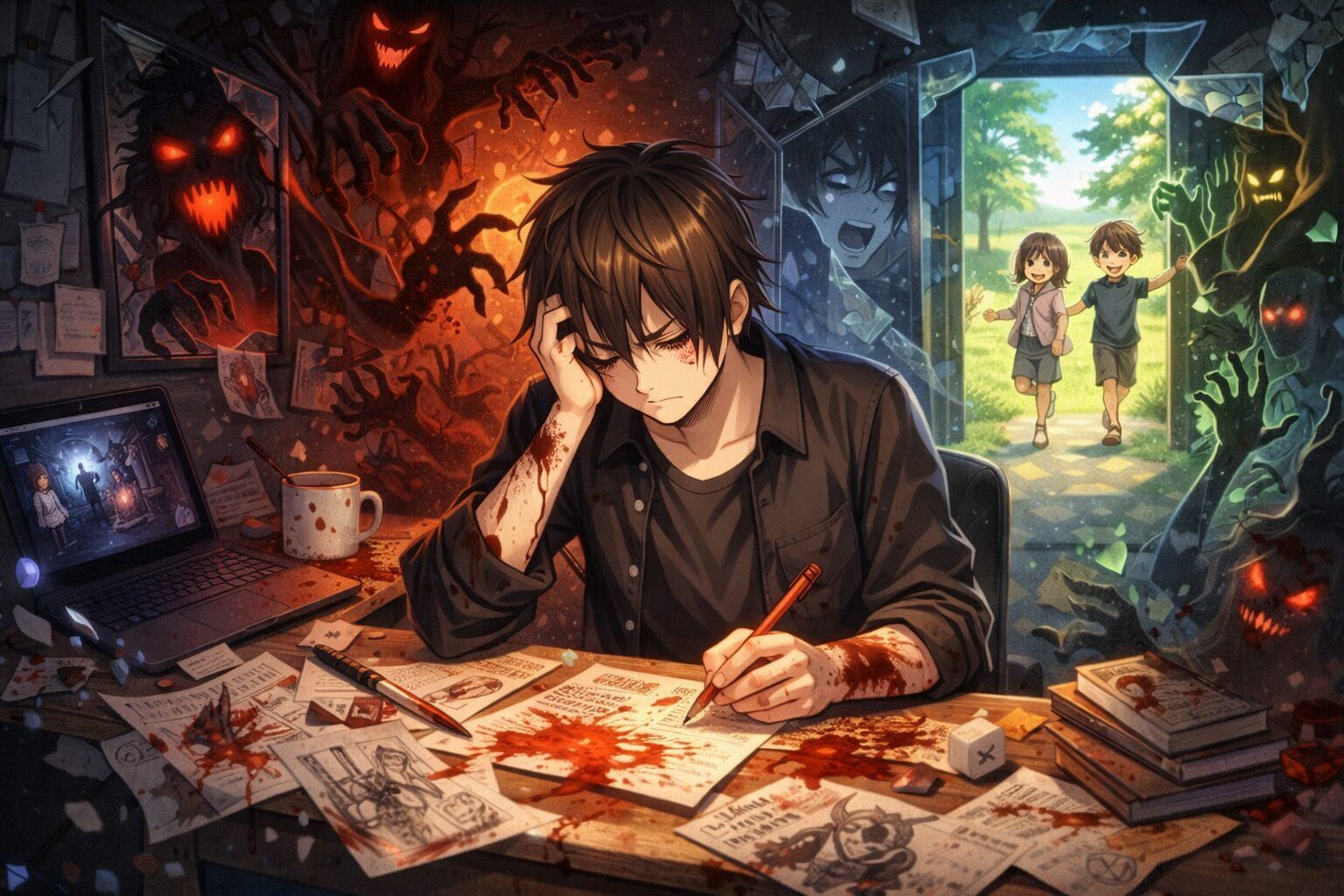
Sublimation of Negative Emotions in Creative Activities and Reality Reflection Mechanisms Based on the “Law of Mirrors”
A Comprehensive Study on the Psychological Structure of Free Horror Game Creators
- Introduction: Internal Inconsistency in Creators and Dissociation of Social Representation
- Psychoanalytic Perspective: Dark Creativity and Defense Mechanism Dynamics
- Energy Transitions in the 22 Emotional Stages: Why “Anger” Accelerates Creativity
- Amplification of Negative Emotions in SNS Space and Algorithm Effects
- Reconsidering “Thoughts Create Reality” Discourse: Law of Mirrors and Creative Causality
- Inverse Relationship Between Happiness and Creative Motivation: Verification by Total Energy Theory
- Gap Between Social Representation and Inner Self: Why Horror Writers Are “Kind”
- Structural Comparison: Creative Styles and Social/Reality Reactions by Emotional Stage
- Conclusion: Creative Integration and Escape from Negative Chains
- References & Citations
Introduction: Internal Inconsistency in Creators and Dissociation of Social Representation
In expressive activities, particularly in the medium of free horror games where expressions that shake the creator’s deep psychology, primal fears, and ethical boundaries are permitted, a dissociation that cannot be overlooked is often observed between the world presented in the work and the behavior that person displays in actual society. The existence of creators who produce works with inhumane or extremely cruel grotesque depictions while simultaneously expressing irritation at workplace interpersonal friction and candidly venting daily dissatisfactions on social networking services (SNS) is not a peculiar phenomenon in today’s digital creative environment.
While it is easy to dismiss this phenomenon as merely “separating work and private life,” from psychological or metaphysical perspectives, deeper causal relationships lie beneath. This report provides multifaceted analysis of the “sublimation” process whereby negative emotions are converted into creative driving force, energy transitions based on Abraham’s “22 Emotional Stages,” and furthermore the correlation between metaphysical discourse that “thoughts create reality” and psychological “projection.” In particular, we develop examination using scientific evidence and theoretical frameworks regarding how negative emotions become powerful triggers in creative work, and why “transition to positive states” is feared to cause decline in creative motivation.
Psychoanalytic Perspective: Dark Creativity and Defense Mechanism Dynamics
The extreme expressions depicted by horror game creators that seem to suggest “heartlessness” do not indicate the creator’s inherent cold-heartedness. Rather, from a psychoanalytic viewpoint, such expressions are interpreted as results of extremely sophisticated psychological adaptation.
Expressive Activity as Sublimation and Conversion of Intensity
“Sublimation” in psychiatry is a type of defense mechanism that converts socially unacceptable impulses or painfully difficult emotions for individuals into constructive or valuable forms such as art or scholarship. The negative intensity of anger, sadness, and inferiority complex will corrode the psyche if left unattended, but by redirecting this as energy for work production, destructive impulses can be transformed into creative output.
Specifically, by projecting “anger” arising from unreasonable workplace relationships into gruesome traps and monster designs within games, creators objectify and process (bankrupt) their own anger. In this process, the darker the work, the greater the repression and stress the creator likely carries in the real world.
Mechanisms of Projection and Reaction Formation
The phenomenon of creators frequently tweeting about relationship troubles on SNS can be explained by psychological “projection.” Projection refers to a psychological state where unacceptable feelings within oneself (such as aggression or dissatisfaction toward others) are felt as if directed from others, or reflected onto surrounding environments. Creators who strongly complain about workplace troubles may unconsciously project their inner dissatisfaction onto surroundings, consequently perceiving strongly a reality where “surroundings are filled with malice.”
Additionally, the act itself of “preferring cruel expressions” may function as “reaction formation,” where one takes the opposite violent attitude in work because one’s actual self is too delicate and easily hurt. This is a paradoxical structure where those who feel fear most strongly turn to the side that creates fear to control it. In fact, cases are not uncommon where famous horror writers or creators of extreme expressions are very gentle and service-oriented in face-to-face communication.
Energy Transitions in the 22 Emotional Stages: Why “Anger” Accelerates Creativity
Abraham’s “22 Emotional Stages” classifies human emotions as energy frequencies (vibrations), providing extremely useful indicators for understanding the source of creative motivation.
“Transformative” Energy Possessed by Negative Emotions
In the emotional scale, when in states close to the lowest levels of “powerlessness (stage 21)” or “despair (stage 22),” humans cannot even possess the will to create. However, “anger (stage 16),” “revenge (stage 17),” and “dissatisfaction (stage 15)” slightly higher up contain very strong active energy seeking to break through the current situation.
| Stage | Emotion | Energy Nature | Impact on Creativity |
|---|---|---|---|
| Stage 1 | Joy, Freedom, Love, Gratitude | Highest stability, harmony | Fulfilled expression, source of inspiration |
| Stage 2 | Passion | Strong propulsion, absorption | Explosive creative motivation, high work immersion |
| Stage 10 | Frustration | Irritation, desire for change | Motivation to “change something,” social criticality |
| Stage 16 | Anger | Intense heat, impulse | Trigger for destructive/shocking expression, explosive output |
| Stage 21 | Powerlessness | Stagnation, energy depletion | Creative activity cessation, self-loss, death ideation |
As this table shows, anger (stage 16) is in a higher energy state compared to powerlessness (stage 21), becoming a powerful driving force that triggers the action of “creation.” Fury at unreasonable treatment in the workplace materializes as “absurd fear” or “thorough destruction” in games because energy frequencies function in this way.
The True Nature of “Creative Calm” Accompanying Transition to Positive
Many creators feel they cannot create when happy because when climbing the emotional stairs and reaching “contentment (stage 7)” or “optimism (stage 5),” the previous “intense energy to fill deficiency” disappears. For creators who have used negative energy as fuel, happiness brings a type of “calm” state that appears to dry up inspiration.
However, this is not “cannot draw because became happy,” but simply the “wave of negative emotions” has disappeared, and total energy is not insufficient. If truly established at stage 1 (joy, love, gratitude), the enormous energy overflowing from there can be converted into expressions of “light” or “life force,” but for creators who have long used “suffering” as their engine, this qualitative transformation often accompanies serious identity crisis.
Amplification of Negative Emotions in SNS Space and Algorithm Effects
The prominence of “complaints” and “sharp statements” on SNS involves not only individual psychology but also structural factors of platforms.
Conspiracy Between Negative Bias and Algorithms
SNS algorithms tend to preferentially display information that stimulates users’ strong emotions. Negative emotions such as anger, disgust, and dissatisfaction function as far more powerful triggers than positive emotions, attracting user attention and accelerating diffusion. Creators expressing anger on SNS and repeating sharp statements, whether intentionally or unconsciously, functions as a “strategy” for increasing impressions and heightening their own presence.
Temporary Relief Through Complaints and Long-term Neural Circuit Reinforcement
From a neuroscientific perspective, complaining brings temporary catharsis (mood change) by externalizing accumulated emotions. However, this simultaneously carries the risk of reinforcing negative neuron connections in the brain and chronically elevating stress levels. The act of constantly writing workplace dissatisfaction on SNS, while appearing like detoxification, actually fixes one’s thought patterns into “dissatisfaction-seeking mode,” creating a vicious cycle that makes perceiving further negative reality easier.
Reconsidering “Thoughts Create Reality” Discourse: Law of Mirrors and Creative Causality
The concept of “thoughts create reality” or “law of mirrors” provides keys for understanding creators’ real lives from psychological and metaphysical perspectives.
Vibration Synchronization and Attraction Principles
According to the basic principle of the law of attraction, emotions are vibrations with specific frequencies that attract matching realities like magnets. Creators whose emotional vibrations remain at low positions (such as stage 15 dissatisfaction or stage 16 anger), even if their works succeed commercially or evaluatively, the underlying “frequency of deficiency and anger” continues attracting new workplace troubles and interpersonal friction in the real world.
Powerful Influence of Negative Vibrations
Notably, negative vibrations tend to have several times more influence than positive vibrations. The act of frequently transmitting dissatisfaction and complaints equals programming one’s subconscious into a state of “deficiency.” Intentionally keeping one’s heart in a “negative state” to complete grotesque creations results in the harsh price as a creator of manifesting that “negativity” in private life as well.
Inverse Relationship Between Happiness and Creative Motivation: Verification by Total Energy Theory
The artist-specific discourse that “cannot write when happy” is essentially a matter of energy “source” and “conversion form.”
End of Creation as Self-Salvation
For creators who feed on unhappiness, creation is a means of “self-salvation.” In states where they are barely avoiding psychological collapse by sublimating their own pain into works, the arrival of happiness means “no need for salvation” disappears. Therefore, creators may unconsciously place themselves under self-destructive self-suggestion that they “must remain unhappy to continue creating.”
Redefining Sensitivity and Qualitative Energy Transformation
However, creation is actually possible even in happy states. What matters is cultivating “sensitivity”—if one can keenly grasp others’ pain and world absurdities without actually suffering oneself, constructing dark narratives is possible even with peaceful private life.
What creative activity requires is not unhappiness itself, but “quantity of energy” that shakes the heart. Negative energy (anger and sadness) is certainly powerful fuel, but recognition transformation is needed that equal or greater energy can also be obtained from “joy” and “gratitude.”
As in the above formula, if creative energy (Ecreative) is understood as the integral of absolute value of emotional amplitude (Aemotion), whether amplitude is negative (suffering) or positive (joy), high creativity is demonstrated if total quantity is large.
Gap Between Social Representation and Inner Self: Why Horror Writers Are “Kind”
Regarding the questioner’s doubt that “can’t negative creativity be made unless one can respond coldly,” opposite results are often observed.
Creation as Catharsis
Creators performing extreme expressions completely externalize their own “shadow” through creative processes. Therefore, they can behave in the real world as extremely gentle and sensible people with toxicity removed. In contrast, people without creative outlets as exits tend to directly strike surrounding people with inner negative emotions.
Delicacy and Empathy Ability
Creating excellent horror works requires “empathy ability” and “delicacy” to deeply understand what frightens people and what hurts people’s hearts. This excessive sensitivity appears as “hypersensitivity” or “being easily hurt” in actual workplace environments, consequently leading to fierce anger expressions on SNS (self-defense reactions).
Structural Comparison: Creative Styles and Social/Reality Reactions by Emotional Stage
The following table compares how emotional stages where creators reside influence creative content, quality of real life, and behavior on SNS.
| Aspect | Negative Dependency Period (Stages 15-22) |
Adjustment/Stagnation Period (Stages 8-14) |
Higher Creation Period (Stages 1-7) |
|---|---|---|---|
| Primary Creative Motivation | Dissatisfaction resolution, self-salvation, anger | Sense of duty, confusion, trial and error | Joy of expression, sharing, love |
| Work Tone | Cruel, absurd, shocking | Ironic, analytical, realistic | Universal, vitality, harmony |
| SNS Behavior | Intense anger, complaints, blaming others | Criticism, cynicism, matter-of-fact reporting | Gratitude, support, positive sharing |
| Actual Workplace Environment | Continuous troubles, strong friction | Malaise, stagnation, indifference | Good cooperative relationships, obtaining support |
| Mirror Law Manifestation | Projection of anger-filled events | Repetition of stagnant daily life | Continuous events to be grateful for |
From this comparison, the creator observed by the questioner can be analyzed as being in a state of pouring powerful energy in the “negative dependency period” into both creative “edginess” and SNS “screaming.” This domain easily attracts momentary attention (buzz) but certainly wears down the creator’s psyche and real life.
Conclusion: Creative Integration and Escape from Negative Chains
Through analysis in this report, mechanisms of internal inconsistency and real suffering that free horror game creators hold have become clear.
Sublimation and Reality Erosion: “Sublimation” converting workplace anger into horror expressions contributes to temporary mental stability, but as long as reproducing that anger’s frequency on SNS continues, real suffering repeats by the “law of mirrors.”
Misunderstanding Energy Efficiency: Anger (stage 16) is a better energy source than powerlessness, but for long-term creative activity, “passion (stage 2)” or “love/gratitude (stage 1)” provide far more sustainable and massive power.
Coexistence of Happiness and Creation: The belief that “cannot create when happy” is merely fear of fuel quality changing. By polishing sensitivity, creators can depict profound darkness without placing themselves at rock bottom of unhappiness.
Ultimately, for creators to mature in the true sense, they must not only seal their own “shadow” within works but also intentionally raise their own inner selves (including SNS statements) to higher emotional stages and achieve harmony with the real world. Courage to accept one’s own happiness and make it fuel for new creation is just as essential for sustainable artistic activity as courage to present cruel expressions to others. When creators stop venting anger on SNS and attain inner peace, their works will transcend mere “grotesque shock” and acquire “depth” that shakes viewers’ souls.
References & Citations
Definition of sublimation in psychoanalysis and its function as defense mechanism
Emotional vibration theory and 22-stage energy scale
Law of attraction and vibration synchronization mechanisms
Psychological examination of negative emotions’ impact on creative work
Neuroscientific effects of social media on emotions
Academic research on projection mechanisms in psychoanalysis