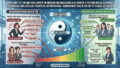
Distorted Yang &
Surviving the Modern Japanese Organization
The transformation of vertical and horizontal social structures,
gendered power dynamics, and survival strategies in toxic environments
Authoritarianism in the vertical society pushed to its extreme. Deep-seated insecurity is concealed beneath aggression—power and intimidation deployed as proof of self-worth.
The Male “Vertical Society” and the Weaponization of Envy
The “vertical society” (tate shakai) that men inhabit is a perpetual battleground of rank and position. Within it, individual identity is fused with organizational status, and the instinct to preserve order becomes inseparable from the instinct to protect one’s own place in the hierarchy. As social anthropologist Chie Nakane observed, vertical relationships in Japanese society, once established, grow more entrenched with each interaction and over time—making it extraordinarily difficult to maintain bonds the moment one steps outside the group.
This compulsion to remain within the pack at all costs amplifies men’s attachment to authority and their drive to dominate others.
| Structural Element | Characteristic | Psychological Impact |
|---|---|---|
| Core Principle | Fixed hierarchy and strict observance of rank | Constant anxiety about confirming one’s position |
| Metric of Value | Competence, education, income, title | Relentless comparison via objective credentials |
| Direction of Competition | Seizing higher posts; eliminating rivals | Self-worth derived exclusively from winning |
| Maintenance Mechanism | Submission to authority; dominance over subordinates | Pride maintained through the exercise of control |
The Weaponization of Male Jealousy: Social Annihilation
Male jealousy translates directly into the exercise of power aimed at social annihilation. Public denunciation in meetings, exclusion from key projects, information blackouts, and the deliberate spread of damaging rumors to superiors. These acts transcend personal grievance—they weaponize organizational authority itself to destroy a person. The victim loses not only psychological safety but their physical and social place in the world.
The Female “Horizontal Society” and the Pressure of Conformity
The “horizontal society” (yoko shakai) primarily formed by women appears at first glance to be flat and harmonious—but its true nature is a space governed by a rigid unspoken rule: no one gets ahead alone. What this society prizes above all is equality and fairness; anyone who stands out—displaying exceptional ability or conspicuous happiness—is perceived as a disruptive element threatening the stability of the group.
Female jealousy does not move upward, as male jealousy does, by climbing over others. It moves downward—pulling whoever has broken free back to the level of the group.
| Structural Element | Characteristic | Psychological Impact |
|---|---|---|
| Core Principle | Prioritizing lateral bonds and empathy | Extreme fear of isolation; compulsive need to belong |
| Metric of Value | Beauty, youth, domestic happiness, desirability | Comparison via subjective happiness and “femininity” |
| Direction of Competition | Enforcing uniformity; pulling down those who rise | Negating others’ happiness to secure one’s own sense of safety |
| Maintenance Mechanism | Conformity pressure and information-sharing (gossip) | Indirect aggression and exclusion through language |
Modern Pathology: The “Loser Male” and the Dysfunction of Homosociality
The growing phenomenon of men who identify—or are labeled—as “weak men” or social losers, and who gravitate toward anti-feminism and misogyny, cannot be reduced to individual personality flaws or family dysfunction. At its root lies the defeat these men experience within the male vertical society, and the failure of homosocial bonds to provide any refuge.
Misogyny is a manifestation of male vulnerability—a self that can only be constituted through the negation of “not being a woman.” For men who have received no recognition in the vertical society and are looked down upon even within homosocial groups, women asserting their rights and advancing socially becomes a threat to the last fortress: male privilege itself.
| Phenomenon | Underlying Psychology | Social Manifestation |
|---|---|---|
| “Loser males” / social rejects | Defeat in the vertical society; nowhere to belong | Retreat into online communities |
| Anti-feminism | Fear of losing privilege; sense of injustice | Attacks on institutional and cultural support for women |
| Misogyny | Projection of vulnerability; hatred of women | Objectification of women; normalization of sexual consumption |
| Same-sex conformity pressure | Chronic inability to show weakness | Reproduction of aggressive “masculinity” |
I. The Defeat in the Vertical Society and the Absence of a Safety Net
The “yang” energy of men is, by nature, oriented toward competing in hierarchies and reaching for higher ground. But in today’s hyper-competitive society, those who fall from the pyramid are branded “incompetent” and sink to the bottom of the vertical order.
Male same-sex relationships in traditional society are grounded in a rigid sense of hierarchy. The moment a man is perceived as weak, he loses his place—which means that expressing vulnerability or offering mutual support is severely curtailed. Defeated men are left with nowhere to find peace, and their inner energy quietly begins to rot.
II. The 22 Emotional Stages: “Anger” as Salvation
At the bottom of the 22 emotional stages sits “despair and powerlessness.” Because remaining in this state means psychological death, humans instinctively attempt to raise their energetic frequency.
III. The Absence of Women as “Mirror”
Having no real-world experience of being accepted by women accelerates further cognitive distortion. Healthy interaction with women serves as a “mirror”—enabling self-reflection and emotional regulation. Without it, the following pathologies take hold.
| Pathology | Description |
|---|---|
| Loss of Resolution | Having no experience of real women, the man mistakes the symbolic “villainess” or “enemy” constructed online for the totality of womanhood |
| Aversion as Defense | To protect oneself from the fear of rejection, the man pre-emptively defines women as “enemies”—even those who have done nothing—as a way of preserving self-esteem |
| Severed Connection | The “yin” capacity for receptivity and connection never develops; self-justifying ideological armor becomes impossible to remove |
IV. Summary: Misogyny as a “Crutch”
The Nature of Workplace “Toxicity”: Distorted Yang and Dissonant Yin
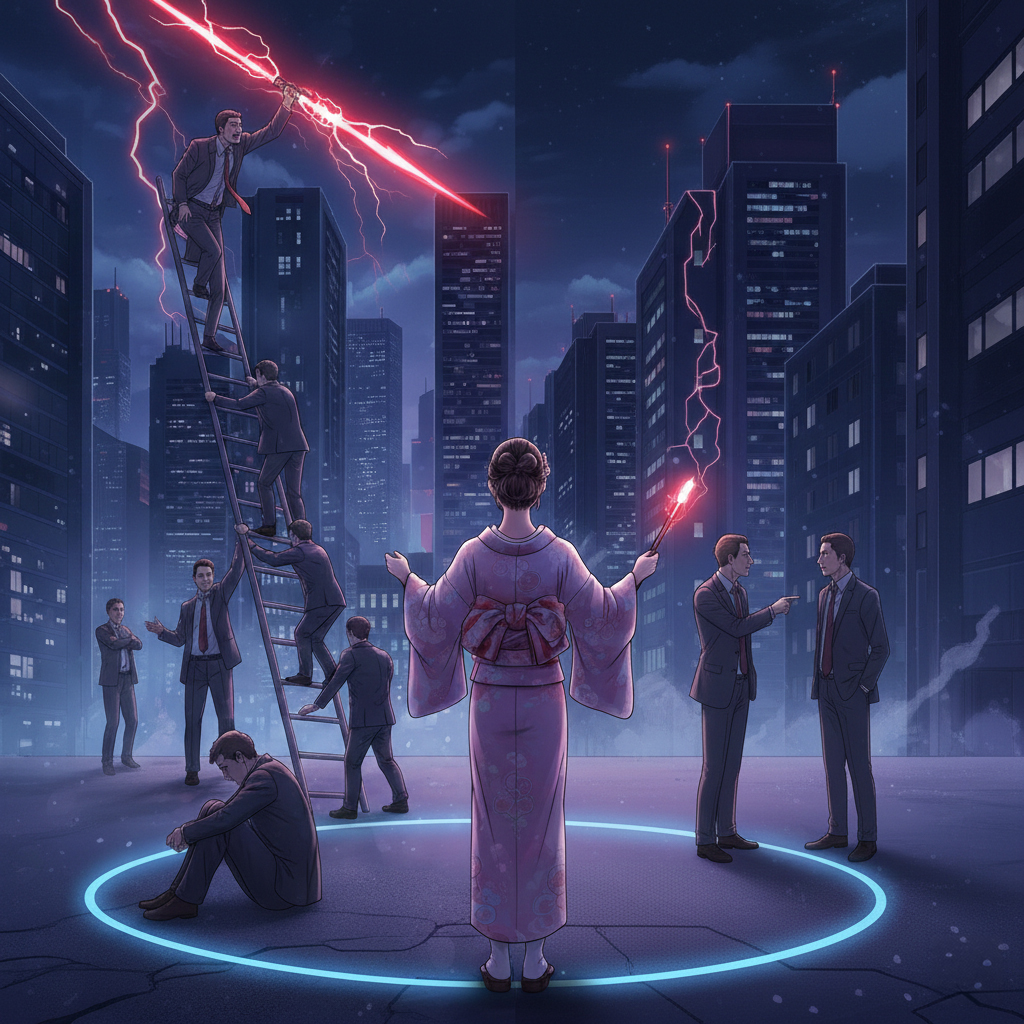
Viewed as an ecosystem, an organization’s health is destroyed by the expression of energy pushed to extreme imbalance. When a “distorted yang” and a “dissonant yin” coexist in the same workplace, the organization becomes trapped between violence wielded by power and cold treatment inflicted by the group.
Behavioral Traits: Volume and physical intimidation, accountability claims built on logical leaps, deliberate targeting of weaker individuals (newcomers, part-timers, quiet subordinates).
Organizational Impact: Rule by fear takes hold. Reporting chains break down; critical errors are concealed.
The distorted yang and the dissonant yin may enter an implicit non-aggression pact—agreeing not to encroach on each other’s territory—or they may go further and ally against a shared target. Once this “negative resonance” begins, the organization’s ethical foundations collapse entirely. Those under attack face a desperate double bind: consulting a superior means being crushed by authority; reaching out to colleagues means being ostracized.
Situational Diagnosis Using the Abraham Emotional Scale
Preventing organizational collapse requires not morale-boosting platitudes but an objective tool for managing the energetic state of one’s emotions. The Abraham “22 Emotional Stages” framework serves as a powerful instrument for measuring workplace toxicity and locating one’s own position within it.
The most critical insight for survival: remaining at stage 22 (powerlessness) means death, but climbing from there to stage 17 (anger) or stage 15 (blame) is itself a process of recovering vibrational frequency. When you feel anger toward someone, do not interpret it as something immoral. Recognize it as the moment you took one step out of powerlessness—that reframing becomes the turning point of your energy.
Advanced Survival Strategies to Prevent Organizational Collapse
Confronting the “worst-case formation” of a distorted yang and dissonant yin coexisting in the same environment requires combining internal psychological care with tactical organizational intelligence.
Refuse to receive attacks as rejections of your personhood—train yourself to observe the attacker as a research subject. Narrating internally, “He just activated a Level 17 anger response,” acts as a gas mask preventing the other person’s toxin from permeating your psyche.
Record date, location, statements, witnesses, and concrete professional harm—without emotional language. With the distorted yang, calmly ask for “the basis of that instruction” and “clarification of priorities.” With the dissonant yin, execute horizontal social rituals (greetings, check-ins) flawlessly while keeping deep personal disclosure minimal—giving no foothold for attack.
If you’re at powerlessness (22), begin by giving yourself permission to silently blame the other person (stage 15). Then allow yourself to feel anger (17), and from there, climb one rung at a time toward hope (6). A good cup of tea. A favorite pen. Something to look forward to after work. The accumulation of micro-pleasures shifts your frequency beyond the range where others’ attacks can reach you.
Rather than clinging to one ally, build a broad, thin network through greetings and small acts of help—letting the impression “that person is decent” spread naturally. This becomes your greatest defense against the dissonant yin’s gossip campaigns. Early contact with occupational health specialists, external counselors, or HR is equally important.
Responding to an aggressor with neither agreement nor rebuttal—simply meeting their gaze and saying “Understood”—creates a silence that amplifies their anxiety and loosens their grip. The conviction that “I can leave whenever I choose” is the most powerful force for relativizing present suffering. Prepare your log for submission to HR or labor authorities upon departure, while channeling energy into skills that increase your market value.
The male vertical society, the female horizontal society, and the contemporary pathologies of “loser males” and misogyny are all expressions of an immature self-love—one incapable of genuinely recognizing and coexisting with those who are different from oneself.
The man who destroys people through authority, and the woman who excludes people through conformity, share the same primitive fear at their root: the terror of having their place taken away. The ultimate tool for preventing organizational collapse is a redefinition of leadership—converting vertical authority into the assumption of responsibility, and evolving horizontal harmony into the genuine respect for individuality.
But for survivors who cannot afford to wait for such ideal transformation, the most essential thing is the resolve: do not hand the rudder of your emotions to anyone else. Even in a workplace where distorted yang and dissonant yin operate, you can evolve from mere victim into an observer who surveys and steers the situation—by tending your inner world and moving through the field with strategic intelligence.
Believing in the coming of a “cross society” in which vertical and horizontal intersect and complement one another, we begin by surviving wisely on the battlefield underfoot. That survival becomes the bridge to the next generation.