夜明け前の詩

意識の深層

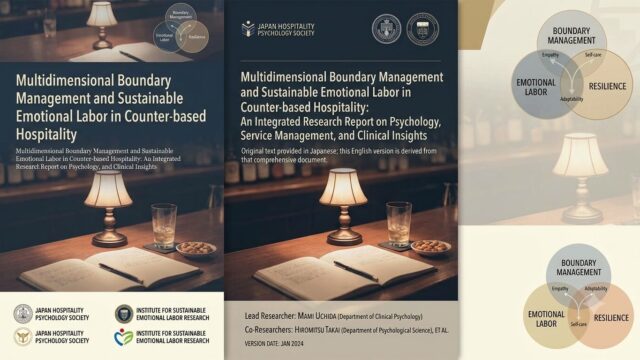
Multidimensional Boundary Management and Sustainable Emotional Labor in Counter Service Industries: A Research Report Integrating Psychology, Service Management, and Clinical Insights

A multi-dimensional analysis of the interpersonal values held by an individual aspiring to enter counter-service hospitality — examined through the lenses of clinical psychology, emotional labor theory, and service management. Why do "maintaining appropriate distance," "tolerance for others' imperfections," and "a whole-system win-win orientation" become the greatest assets in counter-service work? This report integrates academic frameworks with practical knowledge for sustainable bar design.
意識の深層

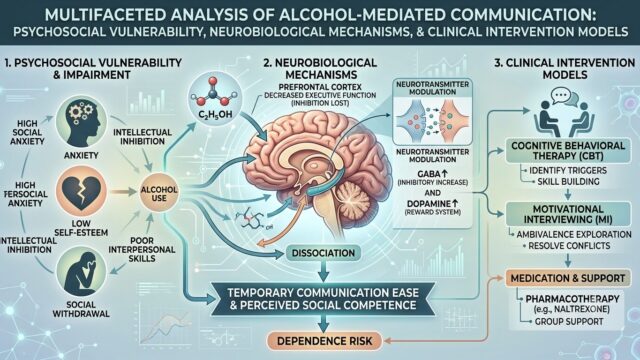
A Comprehensive Study on Married Men’s Addiction to Hostess Clubs in Modern Society: A Multifaceted Analysis from the Perspectives of Neuroscience, Depth Psychology, and Social Structure

Introduction — The Marketisation of Pseudo-Romance & the Weight of “Roles” Borne by Married MenIn contemporary Japanese society, the “night district” — the cabaret club in particular — has long transcended its function as a mere venue for drinking to operate as a highly structured “emotional marketplace.” The psychology of married men who become deeply immersed in this space, inviting economic, social, or domestic ruin, cannot be captured by the simple framework of individual preference or moral deficiency. Behind it lies the runaway of the brain’s reward circuitry as examined by neuroscience, the projection of the “inner feminine” as understood by Jungian psychology, and the refined exploitation structure known as “emotional labour,” all intertwined in complex ways.
意識の深層

The Psychological Structure of Emotional Consumption and Self-Destruction in Host Clubs: The Tension Between Capitalist Exploitation and Spiritual Salvation in the Market for Pseudo-Intimacy

Introduction — The “Monetisation of Emotion” in Modern Capitalism & the Social Function of the Host ClubIn today’s advanced capitalist society, every human relationship is exposed to the tide of commodification — and the host club stands as its extreme manifestation: a singular pseudo-intimacy market. Within this space, “affection,” “recognition,” and “empathy” — which ought by nature to be freely given — are packaged as meticulously calculated services and traded at extraordinarily high prices. Examining the psychology of women who immerse themselves deeply in host clubs is not merely an analysis of addiction; it is, rather, an exercise in illuminating the abyss of loneliness that contemporary society carries and the crisis of self-identity.